
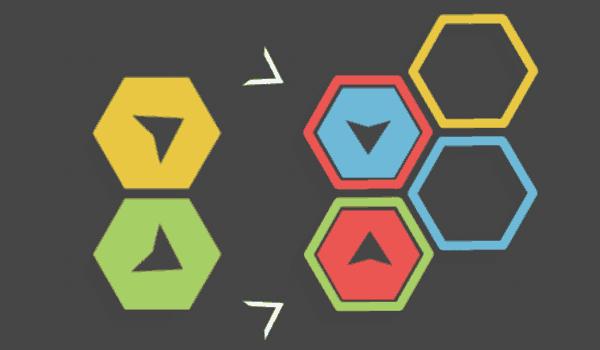
One-Directional Block Mechanics
Every block in MoHeX moves in a straight line and cannot turn. A block continues until it meets a wall, another block, or its target spot. That single rule shapes every decision. You cannot nudge a block sideways or reverse it, so the order in which you push blocks determines whether a layout is solvable or deadlocked. Early grids use one or two blocks to teach this constraint. Later puzzles add more blocks and obstacles, turning each level into a sequencing problem rather than a reflex test.
Sequencing and Spatial Planning
Because blocks stop only when something blocks their path, every move changes the board for the next one. A block pushed too early can seal off a lane another block needs. The game asks you to read the whole grid before acting: which block should move first, which target should be filled last, and which walls or blocks can serve as temporary stoppers. This is why the difficulty curve feels gradual—new layouts introduce one more interacting piece at a time, not a sudden spike.
Controls and Pace
You control blocks with arrow keys or swipe gestures, depending on your device. There are no timers, move limits, or score penalties for pausing. That design choice makes MoHeX approachable for younger players and anyone who prefers to think through a puzzle without pressure. If a sequence fails, you can restart the level and try a different order. The absence of time pressure is not a lack of challenge; it simply moves the challenge entirely into planning.
Who It Suits
MoHeX fits players who enjoy logic puzzles, spatial reasoning, and quiet problem-solving. The family-friendly presentation and simple controls lower the barrier for mixed-age play, while the later grids demand real foresight. If you like the feeling of untangling a layout step by step, the game's core loop—read, plan, push, adjust—delivers that consistently.


Comments
0 comments