
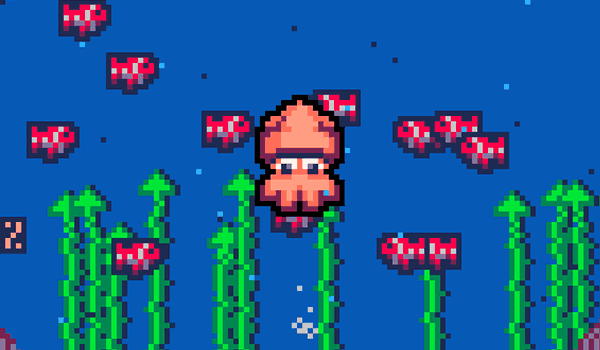
Ink Climb Ocean Dash
Reviews
Ink Climb Ocean Dash delivers a focused challenge that respects your time. The core loop of eating fish to charge a stunning blast while dodging predators is immediately understandable. Difficulty ramps smoothly, introducing new obstacle patterns that keep each run fresh without feeling unfair. The bright, clear art style makes reading the screen easy, even during fast moments. It is a solid choice for quick sessions that reward practice and pattern learning.
About this game
Core Movement and Defense
Players control a squid swimming upward through layers of ocean. The primary action involves shifting left or right to avoid larger fish and other hazards. Success depends on reading the environment and making split-second lane changes. A unique ink meter fills as the squid consumes smaller fish. When activated, this ink releases a cloud that temporarily disables nearby predators or clears a blocked path. Timing this ability is crucial, as it recharges slowly and is most effective when multiple threats converge.
Progressive Threat Design
As the squid climbs higher, the variety and speed of obstacles increase. Early encounters feature slow-moving fish with predictable patterns, giving newcomers room to learn. Later stages introduce creatures that change direction suddenly or travel in groups, requiring more precise steering. The difficulty curve feels natural, with each new hazard building on skills learned earlier. Players must adapt quickly, as the margin for error shrinks with altitude.
Visual Style and Atmosphere
The game uses bright, saturated colors to create an inviting underwater setting. Coral reefs, floating seaweed, and shimmering light rays form the backdrop. Character designs are cartoonish and non-threatening, with exaggerated features that make creatures easy to identify at a glance. The overall look supports quick comprehension, allowing players to focus on movement rather than deciphering complex visuals. This approach keeps the experience accessible for all ages.
Session Structure and Replay Value
Each run lasts only a few minutes, making the game ideal for short breaks. The lack of checkpoints or save states means every attempt starts from the bottom, encouraging repeated tries. This structure rewards pattern recognition and gradual improvement. Players naturally develop routes and strategies over time, turning initial failures into learning opportunities. The simple loop of ascending, dodging, and using ink keeps sessions engaging without demanding long commitments.
Comments
0 comments