
Core Concept and Mechanics
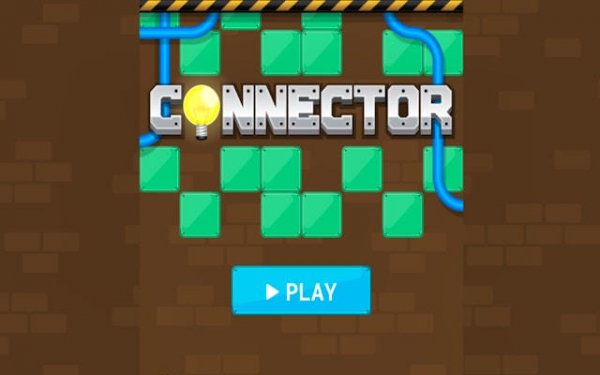
Logic Loop Builder presents players with a grid of movable tiles, each featuring a curved or straight path segment. A battery sits at one edge of the grid, and a light bulb at the opposite side. The goal is to rotate and slide these tiles so that they form a single, unbroken route from the battery to the bulb. When the connection is complete, the bulb illuminates, providing clear feedback that the puzzle is solved. This simple premise hides a surprisingly deep logic challenge, as each tile must align perfectly with its neighbors to create a continuous loop.
Level Design and Progression
Early levels use small grids with only a few tiles, allowing newcomers to grasp the rotation and sliding mechanics quickly. As players advance, grids grow larger and include more complex tile configurations. Some levels introduce obstacles or fixed tiles that cannot be moved, forcing players to work around them. The difficulty curve is gentle but steady, ensuring that each new puzzle feels like a natural step forward. Because every level is handcrafted with a unique layout, repetition never becomes an issue.
Visual Style and User Experience
The interface is clean and uncluttered, with muted colors that keep the focus on the puzzle itself. Tiles are clearly marked with directional arrows or lines, making it easy to see their orientation at a glance. When a tile is rotated, a subtle animation confirms the action. The game provides no timers or score counters, so players can think through each move without pressure. This minimalist design creates a calm atmosphere that suits both short breaks and longer play sessions.
Strategic Approaches and Problem Solving
Successful players often begin by scanning the entire grid to identify the positions of the battery and bulb. They then work outward from both ends, gradually connecting the two paths. Rotating a tile before moving it can reveal new possibilities, and sometimes the best move is to temporarily disconnect a section to allow a better overall layout. Because there is no penalty for mistakes, experimentation is encouraged. Over time, players develop stronger spatial visualization skills and learn to recognize common patterns that appear across different puzzles.






Comments
0 comments